One of the most important concepts in public pension finance is Normal Cost—the annual cost of benefits earned by employees in a given year. Understanding Normal Cost, both for employees and for the State of Illinois as the employer, is essential for evaluating the sustainability of the pension system.
What is Normal Cost?
For the person entitled to the pension, their Normal Cost is simply the amount they receive each year. It represents the value of the additional pension obligations accrued during that fiscal year—not past unfunded liabilities, just the cost of newly earned service. In Illinois systems, normal cost also includes administrative expenses.
For the employer—in this case, the State of Illinois—Normal Cost is defined in statute as the portion of total Normal Cost not covered by employee contributions. Employees contribute at a fixed statutory rate. Whatever portion of the annual benefit accrual remains is the employer’s responsibility. Each pension system’s Board of Trustees approves this amount annually, expressed as a percentage of projected active-member payroll.
Tier 2 Reforms
When Illinois reformed its pension system in 2010 and created Tier 2 for employees hired after 2011, one of the central goals was to reduce the State’s employer Normal Cost. Without reform, the State faced a trajectory of rising annual costs that threatened long‑term fiscal sustainability and the ability to deliver promised benefits.
Tier 2 benefits were designed to be significantly less costly than Tier 1. This was not only a budgetary necessity—it was a structural correction aimed at aligning benefit accruals with what the State could realistically afford.
As the Civic Federation has noted, pension shortfalls are created when the contributions made by the State and the normal cost plus interest on the existing unfunded liability exceed the actual minimum amount necessary to prevent the growth of that liability. One of the reasons why Illinois’ pension liabilities have grown so high is that over the years, the State consistently failed to contribute it’s normal cost plus interest.
Employer Normal Cost as a Percentage of Payroll
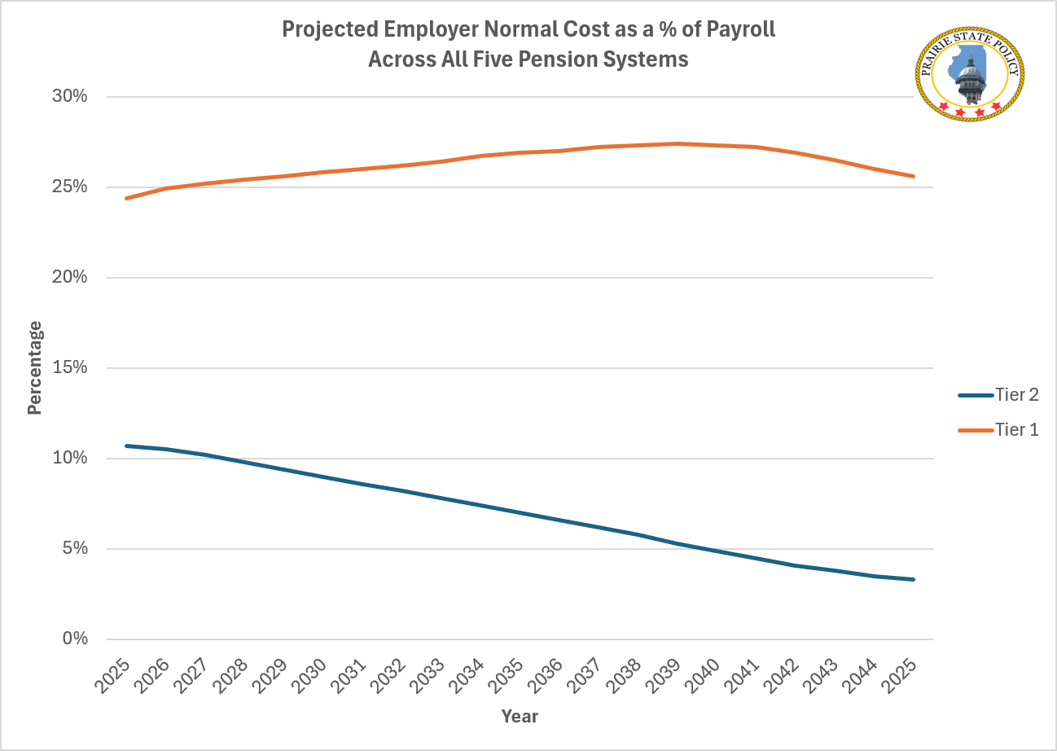
Perhaps the most important component of Normal Cost is exactly how much of the employer’s payroll [in this case, the State] must be devoted to funding newly earned benefits each year. As previously noted in prior posts, the Tier 1 system was putting a huge cost burden on State finances and reform was needed. With the implementation of the Tier 2 system, a lot of progress has been made to make the overall system more sustainable, reduce the risk of fiscal turmoil, and ensure the State is able to fulfill it’s obligation to both current and future retirees. Figure 1 below illustrates this trend.
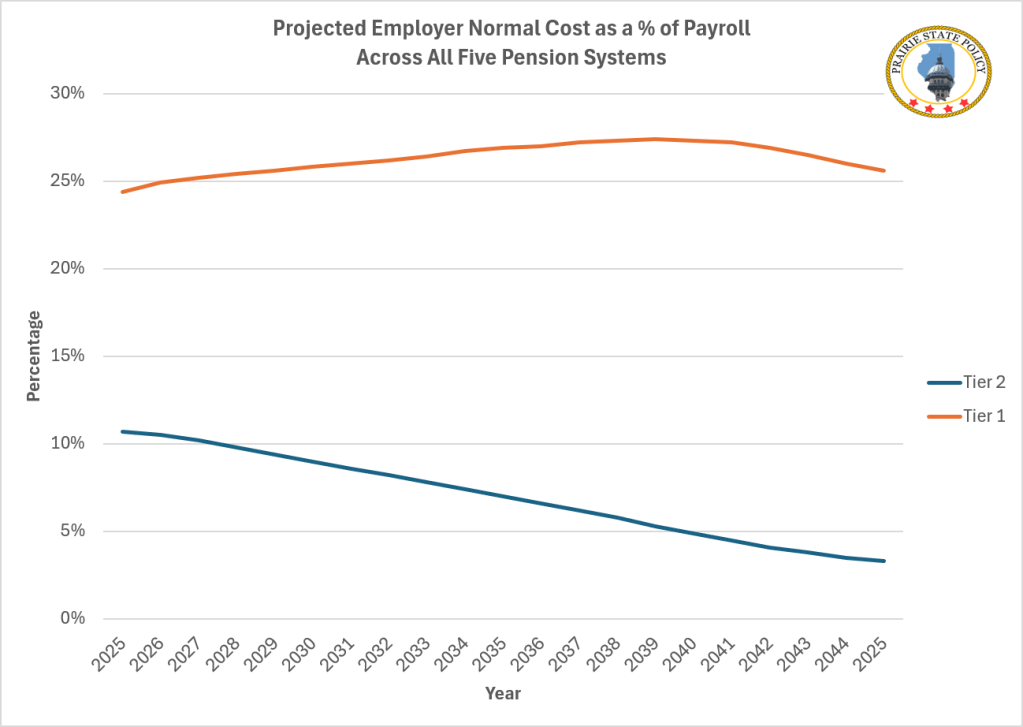
Figure 1 above shows that the State’s projected normal cost as a percentage of payroll is expected to reduce significantly for Tier 2 employees (those hired after 2011). For those in the Tier 1 system (those hired before 2011), the State will continue to have a larger percentage of cost compared to Tier 2. However, a big indicator of progress is that the cost percentage for Tier 1 is being maintained and not growing.
While Illinois still faces a large unfunded liability, the reforms implemented through Tier 2 have made the current benefit structure far more affordable. Continued discipline in meeting Normal Cost plus interest obligations remains essential, but the structural reforms have already delivered meaningful improvements.
Discover more from Prairie State Policy
Subscribe to get the latest posts sent to your email.

