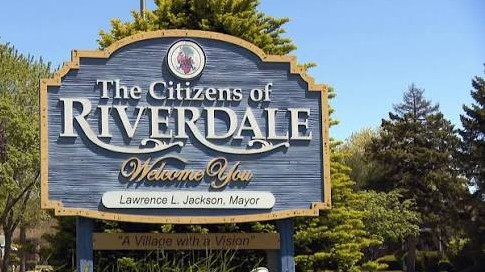
Riverdale, a small municipality of roughly 10,000 residents, is in trouble. In April of this year, Fitch Ratings downgraded Riverdale’s Issuer Default Rating (IDR) from B‑ to CCC‑, citing reasons such as low margin for servicing obligation, weakened financial profile, negative general fund reserves, very limited liquidity, and deferral of pension spending. With Fitch’s downgrade, Riverdale holds the title as the Illinois municipality with the worst credit rating in the entire state.
But how did Riverdale, a relatively small suburb just south of the city of Chicago, get to this point? The Village unfortunately has had a poor fiscal outlook for many years now. Prior to April 2024, Riverdale consistently had a credit rating of CCC and has been running negative general fund balances for years.
When it comes to it’s tax base, village relies heavily on state‑shared income tax distributions (LGDF), which grow slowly and are vulnerable to state‑level fiscal stress. As we have seen this past legislative session, there was a proposal to decrease the Local Government Distributive Fund (LGDF), which was ultimately rejected. Combine this with high fixed costs, such as pension obligations and essential services, and the village doesn’t have much flexibility. In fact, Riverdale deferred pension contributions for years, depositing the funds into the village’s pooled accounts and using it for general operations.
In 2018, Riverdale issued $7.5 million in income‑tax securitized bonds (Series 2018A). These bonds were originally rated BBB‑, meaning they were considered low investment grade. However, the structure of these bonds created a critical vulnerability: the securitized bonds’ rating is capped at six notches above the village’s Issuer Default Rating (IDR). As Riverdale’s core credit weakened, the securitized bonds were dragged down with it. This linkage meant that any deterioration in Riverdale’s finances would automatically trigger downgrades in its bonded debt.
Then there is governance challenges and a shrinking tax base. Longtime Mayor, Lawrence Jackson, was removed from office in 2025 after felony convictions of perjury and obstruction of justice. As Fitch has reported, Riverdale, has experienced severe population decline, dropping from over 15,000 residents in 2000 to approximately 10,200 today. This reflects a roughly 25% decrease since 2010, marking it as one of the most significant rates of continuous population loss in the south suburban Cook County region.
If the tax base continues to decline, there will be less revenue to pull from to meet their growing obligations. Moreover, Riverdale does not have a robust economy. The most recent U.S. Census has reported that the Village has a median household income of $39,833 with 41.5 percent of its population in poverty territory.
With a significant amount of your tax base identified as low income, there needs to be alternative sources of revenue, such as a strong business tax, base to offset the low-income base. The Village has a total of 278 businesses, meaning a ratio of 1 business for every 37 residents. While this is a low ratio compared to similar Illinois municipalities, its not necessarily diverse – CMAP’s community snapshot indicates Riverdale has very small commercial and industrial bases, with limited business activity relative to population.
Discover more from Prairie State Policy
Subscribe to get the latest posts sent to your email.

